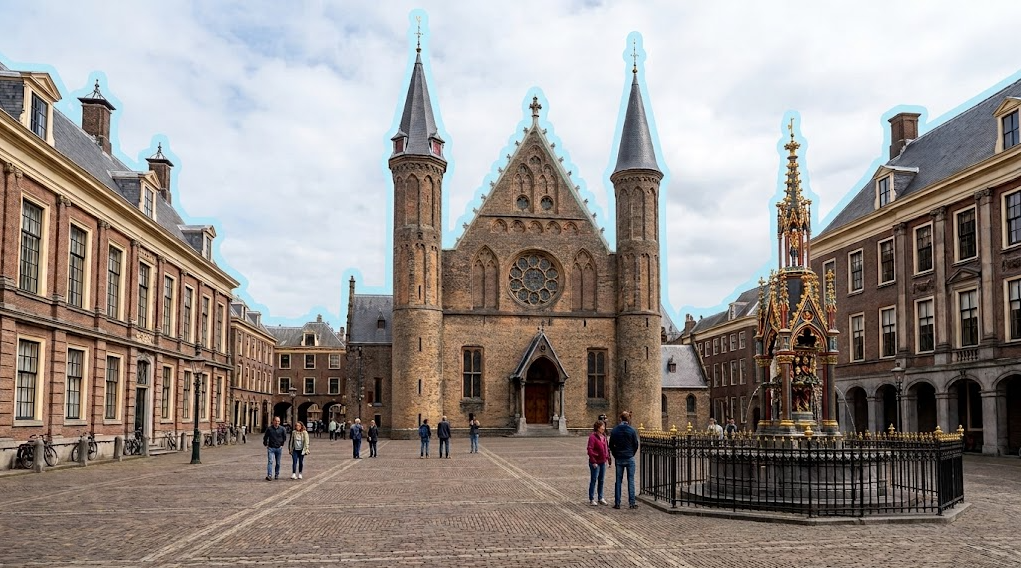
Tuesday 15 September is Prinsjesdag, the Dutch Budget Day. Dutch Budget Day 2026 is the moment the government puts its plans for 2027 on the table, and for an SME they land in three places: your taxable profit, your payroll costs and your company car.
You don’t need to wade through three hundred pages of the Miljoenennota, the annual budget memorandum. Below is what is already settled, what we’re watching on Tuesday, and what you can sort out yourself without waiting for The Hague. Enjoy the read.
What actually happens on 15 September
Prinsjesdag always falls on the third Tuesday of September. Early in the afternoon the King reads the Speech from the Throne: the government’s account of how the country is doing and what it plans for the year ahead.
At around three in the afternoon the Minister of Finance hands the famous briefcase to the House of Representatives. It contains the Miljoenennota and the national budget. The Tax Plan goes to parliament at the same moment, and for business owners that is the document that really counts.
One thing worth remembering: published is not the same as final. Both chambers of parliament still have to vote, usually in November and December, so things can shift. The
House of Representatives explains the process on its own site.
Dutch Budget Day 2026 for your SME: what is already settled
Part of the 2027 package is already law. None of it will be a surprise on Tuesday, but it all works through into your numbers.
- The self-employed deduction drops from 1,200 to 900 euros. If you meet the hours criterion, you can deduct 300 euros less from your profit next year. Note that this does not automatically mean 300 euros more tax. What it actually costs you depends on your profit, your rate and your other deductions.
- A quarter per business kilometre. If you are taxed as a sole trader and drive your private car for work, you can deduct up to 0.25 euros per kilometre, backdated to 1 January 2026. The same amount is being written into law as the tax-free allowance for employees, so check that your expense policy still matches.
- More room in the work-related costs scheme. On the first 400,000 euros of your wage bill, the tax-free allowance rises from 2 to 2.16 percent on 1 January 2027. Above that threshold it stays at 1.18 percent.
- Road tax on vans goes down. For business owners it is halved in the second half of 2026, and for trucks it disappears altogether.
What we’re watching on Tuesday
These are the points that are not fixed yet but are already circulating in the run-up. Run through them and see which ones touch your situation.
- The starter’s deduction. It currently stands at 2,123 euros and the government wants to lower it in 2027. How much survives will only be clear once the Tax Plan is published. From 2028 it is meant to disappear entirely, but parliament has not signed off on that yet. About to start a business? This is the moment to run the numbers.
- Fossil-fuelled company cars get more expensive. From 2027 employers are expected to face an extra 12 percent levy on new petrol, diesel and hybrid company cars that are also used privately or for commuting. Cars you already run fall under a transitional arrangement until September 2030. If you are mid-way through a lease decision, timing matters a lot this autumn.
- The youngtimer scheme. If you drive an older car for work, keep an eye on this one. The minimum age may go up from sixteen to 25 years, which would remove the favourable tax treatment for a great many cars.
- The energy investment allowance. This is expected to rise from 40 to 45.5 percent. On an approved investment of 50,000 euros that means 2,750 euros more off your taxable profit. Going greener becomes more attractive while fossil benefits are phased out further.
- The SME profit exemption. In 2026 it sits at 12.70 percent of profit after business deductions. Nothing has been announced for 2027, but after the self-employed deduction it is the biggest lever on your taxable profit.
- Box 1 and box 3. The income tax brackets are expected to rise more slowly than inflation, which quietly pushes up your effective tax burden. The shift to taxing actual returns in box 3 is planned for 2028; in 2027 the flat-rate system still applies.
What it adds up to
Line the measures up and one direction emerges: deductions are being trimmed and thresholds rise more slowly than prices. You don’t need to be a tax adviser to see where that lands. On the same revenue, you keep a little less.
That is no reason to panic, but it is a reason to look at your fixed costs. You can’t move the dials in The Hague. The ones in your own business, you can.
One fixed cost you do control: your phone setup
For a lot of SMEs, telephony is the line item nobody touches for years. There is a contract, there is a system on the wall, and as long as the phone rings nobody looks at it. Which is exactly why there is usually room in it.
Three things to check this month. One: are you still paying for hardware or separate lines you no longer use? Two: do colleagues have individual subscriptions you could bundle? Three: are you keeping numbers nobody actually calls anymore?
If several people take calls, the
SME package from 15 euros a month is a tidier alternative to a pile of separate subscriptions. Several colleagues on one number, a queue, ring groups and a phone menu are all included as standard. To see the full range first, have a look at
our business telephony features.
Not sure which kind of number still suits your business? Our page on
number types puts the options side by side. A regional number, a national 088 number and a free service number each come with a different price tag and a different impression.
Get autumn sorted while you’re at it
You’re already shuffling through your admin. So set your availability up properly for the rest of the year while you’re there, because October and November are traditionally the busiest months on the phone.
We wrote a checklist for
getting your availability ready for autumn: opening hours, voicemail, queue and ring groups in five steps. If you want to look specifically at your menu,
setting up a phone menu walks you through the upsides, the downsides and a few practical tips.
Tuesday at three: how to find what affects you
The summaries will appear fast once the documents are out. Keep it simple and start at the source. All the official Prinsjesdag documents, the Speech from the Throne and the Tax Plan are published on the
government’s Prinsjesdag page.
Prefer it framed around running a business? On the day itself, all current and official schemes are collected on the
Ondernemersplein, the government’s business portal, with the changes and start dates listed per topic. Both sources are in Dutch, so keep a translation tool handy if you need one.
Then look up two things: what happens to your deductions, and what happens to your payroll costs. For an SME those are almost always the two biggest items. The rest can wait until you sit down with your accountant in October.
The short version
Dutch Budget Day 2026 is not an earthquake for SMEs, but it is a stack of small reductions you will notice in next year’s tax return. Wait for Tuesday, then read only the two parts that affect you, and block out one afternoon in October for your fixed costs.
Want to cross telephony off that afternoon’s list in advance? Take a look at what the
SME package does for your business. We handle the setup, so there is nothing technical for you to figure out. Good luck on Tuesday.